Templar
Non nobis, Domine, sed nomini tuo da gloriam
MCXIX · ANNO DOMINI
Templar
The First Bankers. The Hooked X. XRP.
Nine hundred years before the XRP Ledger, warrior monks invented a way to move value across the world without moving gold.
~1,000
Commanderies
188
Years of operation
9
Founding knights
1
Shared ledger
 01
THE PROBLEM
Roads of Blood
In the 1100s, thousands of pilgrims walked from Europe to Jerusalem. Every one of them needed money for food, ships and lodging along the way.
But a purse of silver was an open invitation. Bandits, pirates and corrupt lords waited on every mountain pass. Many pilgrims never arrived.
The world needed a way to move wealth without carrying it.
 02
THE INVENTION
The Coded Ledger
The Templars built what was, in effect, a private international bank. Each deposit was recorded in the Order's ledgers and matched by a sealed letter of credit.
Letters were written in cipher, so only Templar treasurers could read the amount. Theft became pointless — a stolen letter was just parchment.
Commanderies settled balances among themselves. Gold stayed in the vaults. Only the information moved.
The First Money Transfer
Medieval roads were deadly. Carrying coins meant losing them. The Templars' answer was simple and revolutionary.
Deposit
London Temple
A pilgrim hands his gold to the Templars before leaving for the Holy Land.
→Encode
Sealed charter
He receives a coded letter of credit — worthless to thieves, readable only by the Order.
→Travel
3,000 km of danger
He crosses Europe carrying paper, not coins. Bandits find nothing worth taking.
→Redeem
Jerusalem Temple
He presents the letter and withdraws his value, minus a small fee. Value moved — gold did not.
The Templar ledger: value flowing between commanderies, not coins on the road.
 03
FRIDAY 13 OCTOBER 1307
The Fall
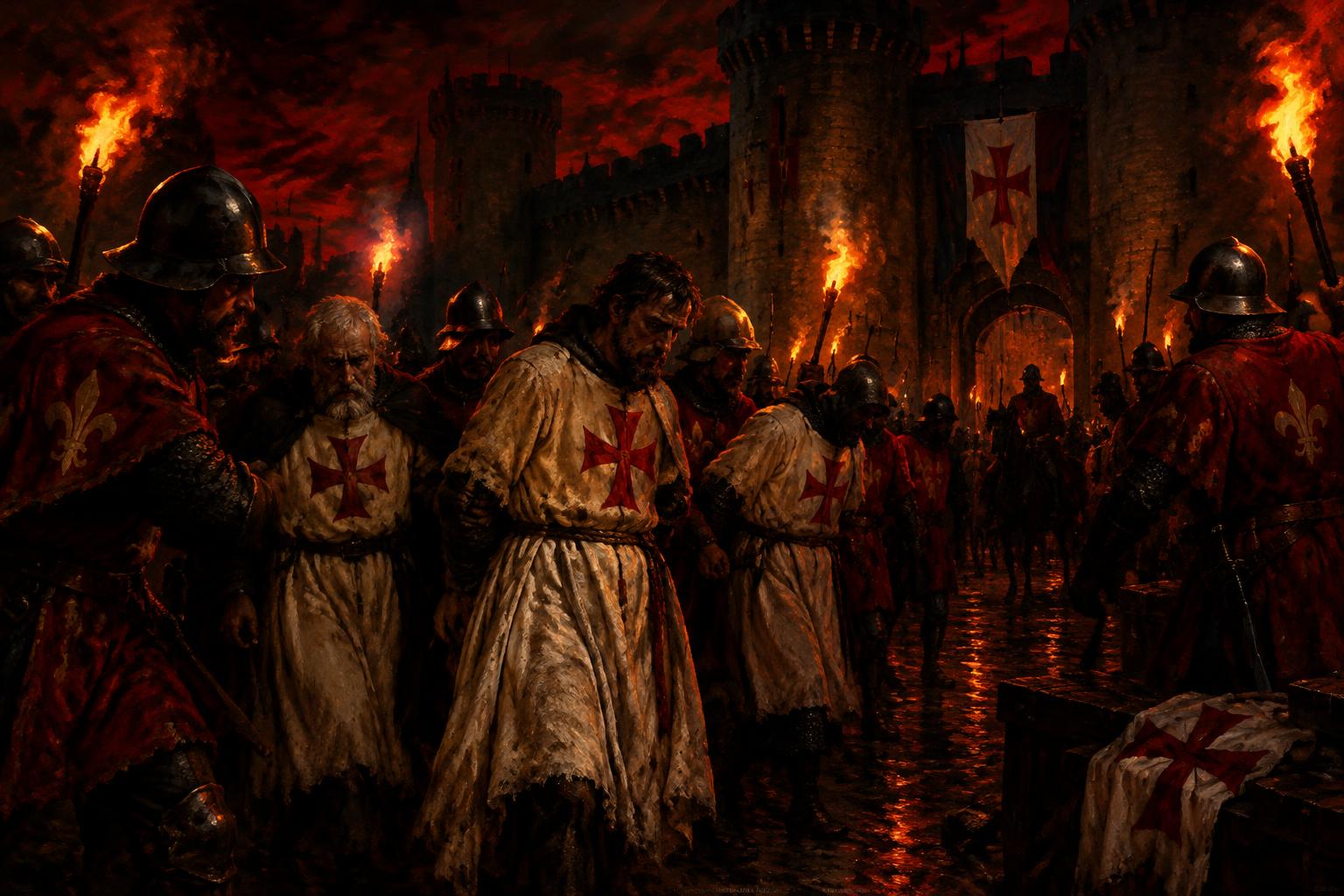
The Templars grew so rich that kings owed them fortunes. King Philip IV of France, deep in their debt, ordered every Templar in France arrested at dawn on a single day.
Many say this is where the "unlucky Friday the 13th" superstition comes from. By 1312 the Order was dissolved, and in 1314 Grand Master Jacques de Molay was burned in Paris.
But the fleet vanished. The treasure was never found. And the legend says the knowledge went underground.
 04
THE SECRET SURVIVES
Carved in Stone
Over the centuries, Templar lore was tied to the Freemasons, to secret voyages to the New World, and to strange markings — above all the Hooked X found on the Kensington Runestone.
To believers, the Hooked X is a signature: the mark of those who kept the Templar secrets alive.
THE SYMBOL
The Hooked X
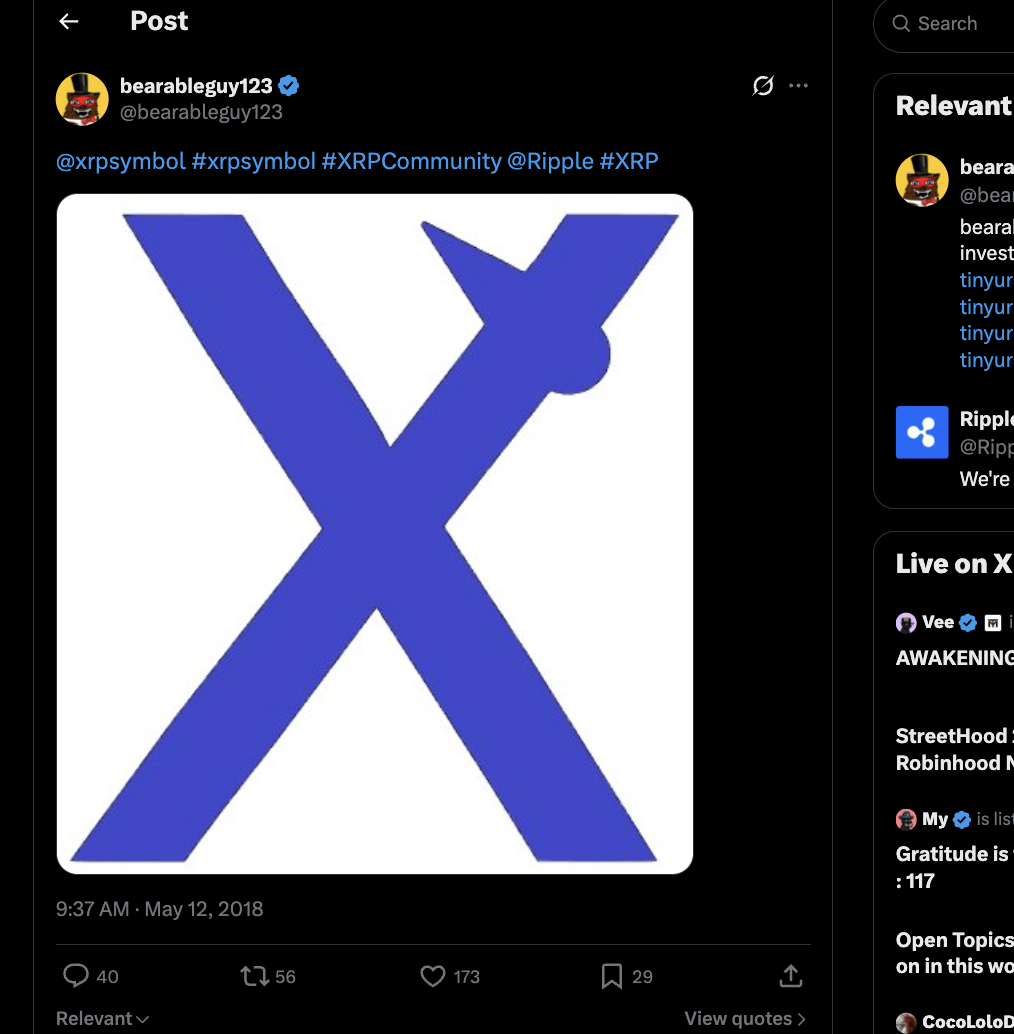
Researchers of Templar lore point to the Hooked X — an X with a small hook on its upper right arm, carved on artifacts like the Kensington Runestone. In legend it marks the Templars' secret bloodline: the hook representing the son of Jesus and Mary Magdalene.
Look at the arm of the XRP symbol. Some in the community see the same hook.
MAY 12, 2018
The Clue from @bearableguy123
Years ago, bearableguy123 posted a hooked X tagged #xrpsymbol @Ripple #XRP. The Templars were Europe's first great banking network — outlawed in 1307, driven into secrecy. Was the XRP mark a quiet nod to the original masters of moving value?
VIEW ON X →05 · THE REBIRTH
A Ledger for the World
In 2012 the XRP Ledger went live — a shared ledger where value moves across borders in seconds, and banks settle balances without shipping money.
Deposit in one place. Settle in another. Trust the ledger, not the road. Nine centuries later, the Templar idea looks like it came back — this time at the speed of light.
One Idea, Two Ages
Deposit becomes on-ramp
The pilgrim's gold in London ↔ dollars entering the network in New York.
Letter becomes transaction
A sealed cipher letter ↔ a cryptographically signed payment.
Commandery becomes validator
Templar houses agreeing on balances ↔ validators reaching consensus.
Then & Now
Nine Centuries
1119
Order founded in Jerusalem by Hugues de Payens.
1139
Papal bull Omne Datum Optimum frees the Templars from local taxes and kings.
1150s
Letters of credit flow between ~1,000 commanderies across Europe and the Levant.
1200s
Templars act as treasurers to the kings of France and England.
1307
Friday 13 October — Philip IV arrests the Templars in France.
1312
The Order is dissolved. Legends of hidden treasure and secret survivors begin.
2012
The XRP Ledger launches: value moved across borders in seconds.